Welcome to episode 182 of the Sounds like a search and rescue podcast. This week we are joined by the NH Wild Crew - Nichole and Paul. They are avid white mountain hikers who focus on fun, photography and friends. They are here this week to share some stories, give us some info on their favorite hikes, tips on gear and photography. Plus we give a run down on proposed projects in the White Mountain National Forest including updates on Sawyer River road, Lincoln Woods, Hermit lake shelter and others. Stomp shares a story about Mt. Everest climbers using performance enhancers to increase their odds of finishing, butt sledding accidents, a review of some winter clothes from US Sherpa, a discussion about Snowshoe etiquette and butt sledding safety and a recent close call rescue off the greenleaf trail.
This weeks Higher Summit Forecast
About NH Wild
Topics
-
The Stomp crew was hit
-
Plymouth, NH is the Nacho capital of NH
-
White Mountains Schedule of Proposed Actions (SOPA)
-
National news - hikers getting shot near the southern border
-
Two Butt (or Bum) sledders injured in Canada
-
Performance Enhancers for Mount Everest
-
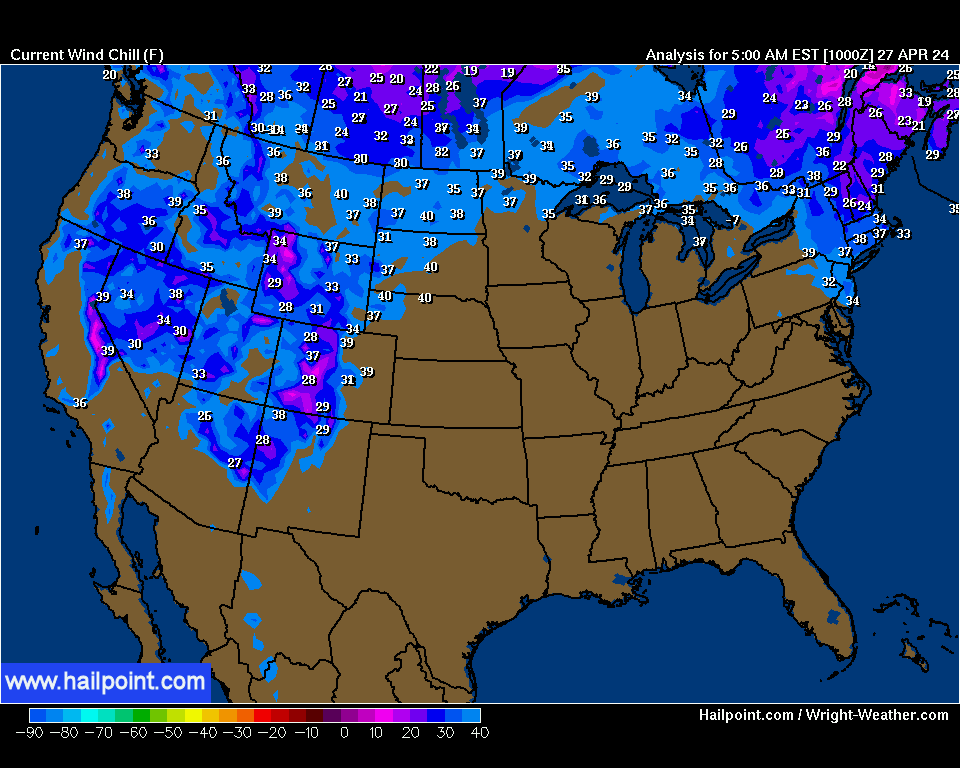
Wind Chill - Snow in Florida
-
US Sherpa Clothes
-
Burton - longboarders
-
Skiing in the Dry River
-
Dave Shits in the Woods is on the PUDS Podcast this week
-
Hiking the Wildcats, Mike, Nichole and Paul
-
Notable Hikes
-
Welcome Paul and Nichole from NH Wild
-
Snowshoes - when to use, tips and tricks
-
Butt Sledding - advice and safety
-
Recent Search and Rescues
Show Notes
-
Xenon Gas banned in professional cycling after use by Russians in Sochi Olympics
-
PUDS for a discussion about bushwhacking the NH Highest Hundred & the NHI69
-
BC skiers lost of Spruce Peak, rescued by Stowe Mountain Rescue
Sponsors, Friends and Partners
[00:00:08] Here is the latest Higher Summits forecast brought to you by our friends at the Mount Washington Observatory. Weather above treeline in the White Mountains is often wildly different than at our trailheads. Before you hike, check the Higher Summits forecast at mountwashington.org.
[00:00:30] Weather observers working at the non-profit Mount Washington Observatory write this elevation-based forecast every morning and afternoon. Search and rescue teams, avalanche experts and backcountry guides all rely on the Higher Summits forecast to anticipate weather conditions above treeline. You should too.
[00:00:52] Go to mountwashington.org or text FORECAST to 603-356-2137. And here is your forecast for the weekend of January 25th, 2025. And we have an alert.
[00:01:16] A windchill advisory is in effect from 12pm EST Thursday through 12pm EST Saturday. It's going to be a really cold one, so be super careful out there. Friday will be in and out of the clouds under partly cloudy skies. A slight chance of snow showers in the morning. Possible snow accumulations of a trace to 1 inch with a high falling to around 10 below.
[00:01:41] Winds will be west at 30-45 mph with gusts up to 60 mph. The windchill will be falling to 30 below to 40 below. Yikes. Friday night in the clear under mostly clear skies with a low rising to around 5 below. Winds will be west shifting northwest at 30-45 mph, decreasing to 20-35 mph.
[00:02:09] A windchill falling to 35 below to 45 below again. Then we move into Saturday. Then we move into Saturday. In the clear under increasingly cloudy skies, a slight chance of snow showers in the afternoon with a high around 0 degrees. Hmm. Winds will be northwest shifting west at 30-45 mph, increasing to 50-65 mph with gusts up to 75 mph.
[00:02:37] Windchill will be rising to 25 below to 35 below. We are in the heat of it. So be safe.
[00:03:22] Peckers Studio in the great state of New Hampshire. Welcome to the Sounds Like a Search and Rescue podcast, where we discuss all things related to hiking and search and rescue in the White Mountains of New Hampshire. Here are your hosts, Mike and Stomp.
[00:03:58] We're live here. So Paul and Nicole, you guys, are you ready to go? Yeah. Yeah, I think so. Our daughter is going to be coming in in about like a half an hour. So there may be background noise. Oh. Does she want to be on the episode? Stomp's daughters were on the episode last week. Children are welcome. No, I just wanted to warn you before you heard it, unless you want to like block us out for a little bit of it. Yeah. No. We love little beings. Yes. Yeah. Exactly.
[00:04:27] But speaking of the daughter stomp, the stompette, can I call them the stompettes? Or the machines. Yeah. Whatever you want to call them. Machines. They were a hit. Yeah. Everybody loved them. A lot of good feedback on that. That was fun. A lot of good memories. It's funny trying to recollect all the things that we had done back then, but yeah, they did a good job. It was fun. Yeah. It's crazy how they grow up so fast, right? And you forget those memories. Yeah, tell me about it. But yeah, that was great.
[00:04:56] We got a lot of daughters between, we have eight daughters between us. Wow. Yeah. Gotta populate the earth. Stomp's got five, I have three. Never a dog lover. I grew up with all brothers too, so it's like culture shock still for me. Huh. Yeah, that is funny. Wow. But, alright Stomp, so should I do the intro or do you have any piffy comments that you want to throw in before I do my intro? Let's roll with it. Let's go.
[00:05:22] Alright, well, I thought you might have something interesting to say before I do it. Oh, everything interesting is coming up. What a day. Wow. It's quite the script. Okay. Okay. Yeah, yeah. We got some stuff going on. So welcome to episode 182 of the Sounds Like a Search and Rescue podcast. This week we're joined by the New Hampshire Wild Crew Stomp. If you go hiking with these guys, they're going to make you dance on the summit. I know. Yeah. I'm aware. Mandatory. So you gotta be cute. Mandatory, right? So we got the New Hampshire Wild Crew here.
[00:05:52] So Nicole and Paul, they are avid white mountain hikers who focus on fun, photography and friends. And they're here this week to share some stories, give us some info on their favorite hikes. We'll go over some tips on gear and then talk a little bit about photography. In addition to that, we are going to give a rundown on proposed projects in the White Mountain National Forest for this year, including updates on Sawyer River Road, Lincoln Woods, Hermit Lake Shelter and some other projects that are going on.
[00:06:21] So this is a long list that we'll go through. Plus, Stomp is going to share a story about Mount Everest climbers using performance hansers to increase their odds of finishing the hike. Cheaters! Or the climb. So I want performance hanser stomp, enhancers stomp. Like what? I don't know. I just want something to make me not tired.
[00:06:43] So anyway, but we'll also talk about butt sledding accidents, a review of some winter clothes from US Sherpa, and we'll do a quick discussion on snowshoe etiquette and butt sledding safety. Plus a recent close call rescue off of the Greenleaf Trail. And I think we've got one or two other search and rescue stories to cover. So I'm Mike. And I'm Stomp. And we're Paul and Nicole.
[00:07:12] Yeah, you're Paul and Nicole. We have your wild. And then we cut to the part where Littlefoot says, let's get started. Let's get started! All right, Stomp. So let's turn it over to our friend Christina from Wild Raven Endurance Coaching for a minute. All righty. Be-loop!
[00:07:42] All right. Do-do-do-do-do. Hey, I'm Christina from Wild Raven Endurance Coaching. I work with athletes of all levels from hikers to triathletes, helping you reach your goals with personalized guidance. With years of experience hiking, mountain biking, and trail running across New England, I also have a deep knowledge of the New Hampshire 4,000 footers and the surrounding trails.
[00:08:09] Whether you're a beginner hiker or a seasoned athlete, I'll guide you towards your goals, reducing injury risk and improving your performance through smart, tailored coaching. Are you looking to transition from hiking to mountain running? I'm here to make that journey easier, too. My approach combines strength training, mindfulness, and life balance on and off the trail. Let me help you find more joy in your sport while getting stronger and healthier along the way.
[00:08:36] Visit www.coaching.christinafulsik.com and start your adventure today. So we make that little noise because Stomp's going to put a little drop in there, so. Yeah, you guys are getting a tutorial. Yes. Behind the scenes. Yes. Exactly. Yeah. So cool. All right, Stomp.
[00:09:05] So we've pulled a couple of our, this is the part of the show, Paul and Nicole, where we pull a couple of articles and then we're going to get into a segment on the White Mountain projects list. So we only have one really article about New Hampshire stuff, which is Stomp was texting me over the week. He didn't really text me that much this week, but he was very excited to share with me that he feels like Plymouth is a big foodie scene.
[00:09:31] So he was very excited to share with me that he found like the top five rankings of nachos across New Hampshire and the top three ranked nacho places are in Plymouth. So he's explaining to me how, first of all, I just drive by Plymouth. I don't even think, I don't even think a minute of this place. I drive past it. That's a happening place. Yeah. If I got to go to Musalaki or something, I'm going through there, but that's it. But Stomp is very proud of the foodie scene at Plymouth.
[00:10:00] So why don't you give a rundown stomp of the best nachos in New Hampshire? Slash, you're giving you the scoop. So WMUR did their annual viewers choice awards and they list five, but I'll list the top three. And Plymouth knocked it out of the park for the top three slots, which is great. So the third place winner is the Lucky Dog Tavern and Grill in Plymouth.
[00:10:28] Grilled chicken, buffalo chicken, pulled pork, you name it. Great nachos. Second place, we have the Last Chair Brewery, which is basically at the end of Tenney Mountain Drive on the way to Tenney Mountain. It's at the Rotary. It's a nice brewery, actually. Mrs. Stomp and I have been there recently. Pretty cool. And first place, and I have to admit this is absolutely true, Panther Pub and Grill in Plymouth.
[00:10:53] It's right in downtown, just pretty much adjacent to the Flying Monkey Theater. They came in number one. And Mrs. Stomp just went down there this week and she totally agrees. So if you're in the neighborhood, definitely give one of these three a try. You're going to love it. Okay. Panther Pub and Grill. Paul, you look like you know your way around nachos a little bit. Do you have any in your area that you recommend?
[00:11:19] There's a restaurant, Marker 21, that makes a pretty mean nacho, I would say. Okay. Yeah. Right on Wolfboro Bay. Yep. Okay. All right. So Stomp, I know a place that has really good nachos too. Where's that? It's in Seabrook, New Hampshire. It's called Chili's. Chili's. Come on. Now, I don't know. I'll have to think about it, honestly. I'm not a nacho connoisseur.
[00:11:48] But that's good news, Stomp. I'm proud of you and I'm proud that Plymouth is getting some love. Yeah. Well, think about it. It's a statewide vote, so it is pretty cool. Okay. Good job. Okay. Not too shabby. All right. Well, congratulations. Slasher's hiking topic of the week. So, all right, Stomp. Now, let's get serious here.
[00:12:17] So, I pulled, I did the work on this, Stomp, again. Oh, man. I pulled the list. So, anybody can go on. It's not, really, it's not that hard. There is a list of projects and proposals for work and improvements within the White Mountain National Forest. So, you can go on. This list gets updated quarterly. And it's called the SOPA list. So, it's the schedule of proposed actions in the White Mountain National Forest.
[00:12:46] So, if you want to know what's going on as far as repairs or plans for improvements or anything like that, you can go on to the National Forest website and look up the SOPA listing. And I got to give a shout out to my friend James who had, we were talking about it when we were hiking Zealand a couple of weekends ago. And he just reminded me that I hadn't done a segment on it for a while. So, I pulled this and got a list of things going on here.
[00:13:12] So, Paul and Nicole, as we go through this, I'll just, I may throw it to you to just get your perspective in some of these areas. But the first one and the one I was most interested in was the status of the road repair for Sawyer River. So, I think it was like two years ago there was a storm that wiped out one of the bridges there.
[00:13:32] So, the Sawyer River 2 bridge was deemed to be unsafe because the underpinnings got exposed based on, I think, washouts because of a storm. So, it's been on the proposal list for a while. And I think they have to go through this whole process. So, there is a, there was a replacement proposal. They had to go through a Forest Protection Agency scoping period.
[00:13:59] They had to go through an announcement period to allow for people to make comments on the repairs. And then they had to do a biological evaluation, I'm assuming, in like plants and the impact on the river. And then from there, they went to the decision phase. So, the decision phase started in November 6th of 2024. I think they give it 45 days for final comments. And then on January 8th, they made a decision notice to approve the project.
[00:14:29] So, the estimated, so the decision date was January 8th. The estimated start of the repairs will be, or the replacement of this bridge will be on May of 2025. So, the plan is to replace the Sawyer River 2 bridge with a similar bridge type. And I guess they needed to put together a forest planned amendment to exempt the bridge from the standards that are listed on this forest plan.
[00:14:58] So, it's been approved and it looks like they're going to start working on it. So, it doesn't say a timeline on when it's going to be complete, but my guess would be sometime next summer. So, it could be that we have a shorter hike to get to Carragane. That would be amazing. It adds point of it. Although, I, yeah, I sort of think like, I haven't done it yet with my daughter, but I've already kind of settled on the fact that I'm going to go in from like maybe Ethan Pond and Desolation and do that.
[00:15:28] So, I kind of think it's not like a horrible thing to have that road out because it just, it becomes a more epic adventure, right? Yeah, it does. Have you ever checked out that like old town off the side of the road? There's like old brick buildings. That was really cool. Yeah, yeah. Stomp spent a ton of time down there. Yeah. Yeah. It's neat. We put up a reel about that. It's a neat spot. Yeah. It's crazy though. So, yeah, they were doing work.
[00:15:56] I mean, the road's been closed all summer since the rains that we got. But when we did the captain, we saw the work that they had done. And I guess that would make sense if it's labeled bridge number two, maybe bridge two from the highway, perhaps. I'm not sure how that's designated. But yeah, it's fraught with erosion up in that whole stretch. Yeah. So, that'll be replaced. And yeah, so people that want a shorter trip to Carragane will have that option.
[00:16:24] I'm guessing like maybe late summer, fall of next year, depending on how long it takes. They may even just like decide to replace the bridge, keep the road closed for a while to let it settle and then open it up in 2020. So, I don't know. I don't know what the plan is. It doesn't say. The details are kind of scarce on these. And what I've noticed with the SOPA reports is that they'll have like a list. They have the full list. There's like 30 different projects on it.
[00:16:50] And they have the ones that say updated are the ones that typically have like real decision dates on them. But it does seem like they push a lot of these projects out and just they don't take any action on them. And they just push the decision date out for like four or five months and they just fester. So, Lincoln Woods, which brings me to Lincoln Woods.
[00:17:08] So, Lincoln Woods has an 800-foot section about a half a mile from the parking lot that has slope stability issues. So, the plan is to put in a retaining wall along that 800-foot section. The challenge is that that's obviously a major access point to get into the PEMI. I think a half a mile in, I think that's even before the Osseo Trail, right?
[00:17:38] Yes, I believe so. It's that slight, when you're heading in, it's that slight curve to the left and it's just gated and flagged off. I mean, it's just going to get worse. They have to do something. Yeah, it's interesting because now the decision date... So, first of all, there's no supporting documents on this. There was supporting documents earlier. They're gone. But now they're putting a decision date and an implementation date of July 2025.
[00:18:04] So, this project's been scoped out since December of 2021. So, it's been over three years now and they've pushed it out again. So, I don't know what the deal is there, but it's probably just a timing thing and they may be looking to get some additional approvals before they can do a project like this. Because they're talking about a retaining wall against the PEMI, which I'm assuming goes against a lot of regulations. So, they probably have to get a lot of exceptions to get it done. Interesting. Yeah.
[00:18:34] I mean, that one little section's probably like five feet wide at the moment as compared to the 10 plus feet that the whole road is. It's getting pretty narrow. So, we'll be doing PEMI loops this summer then, everybody. Have you guys done like one day PEMIs? We have, yes. You have? Okay. Do you have any plans to do any again or are you done after a couple of them? So, we've done one so far.
[00:19:03] We're hoping this summer that we can each do our own PEMI loop starting at the same spot and going opposite ways. Meeting in the middle. At the same time and meeting in the middle? Yeah, and then kind of finishing. So, that we could each get like our own single day PEMI, but be in the same woods. Do you have a preference on which direction you're going to go? I'm definitely going to go Flumway. Okay. Yeah, yeah. I'm going to send him West Bond. Yeah, yeah. For the Bond.
[00:19:32] That's the harder direction for sure. It is. So, did we lose them? Oh, no. They're here. So, awesome. All right. So, anyway. So, the good news is, is based on this project, you guys will be able to do that no problem. And we'll be paying attention to that. I've never done a single day PEMI loop by myself. So, I have to do one because Stomp did his with the pool noodle. And I have to think of something to carry with me that's more unique than a pool noodle.
[00:20:02] But lighter too. What do you think? Any ideas? I was thinking like a, I don't know. It would be like a teddy, like one of them big teddy bears tied to my backpack. Yeah, we'll think of something good. Yeah, yeah. We'll figure that out. But, all right. Moving on to the next project here. So, there is a, I didn't realize this. So, Great Glen Outdoor Center.
[00:20:28] So, this is the area across the street from the Mount Washington Auto Road. They are putting in about a half a mile single track mountain bike spur trail. It's going to be about two feet wide at the Great Glen Outdoor Center. So, they are, they've got to get approval for that from the Forest Service.
[00:20:52] So, they put in a request through the Anderscoggin Ranger District to be allowed to build that. So, they're, the scoping starts in April and then they're waiting on a decision for June, which is an estimate. And then, assuming that they get the approval, they're going to start building in October of 2025. But, the thing is with these projects, what I see is that every three months or so, they'll push the date out.
[00:21:18] So, maybe this will get approved this year, but it could very well just get pushed out because the dates are all estimates. Good. Keep them off the trails. Yeah, more mountain bike trails for them. So, the next one here, Stomp, is interesting. So, there's a proposal at Hermit Lake. So, Hermit Lake is the section of the Tuckerman Ravine Trail where you get to the bottom of the ravine.
[00:21:45] It's about two and a half miles up from Pinkham Notch. And, you get a lot of visitors there. So, there's currently, let me just take a look here and refresh my memory. The current accommodations. I never even think to look at this. I walk by it like dozens of times. But, there's currently five three-sided shelters, three four-sided shelters, and then three tent platforms.
[00:22:14] So, Hermit Lake can actually accommodate 86 people. And, it's got a year-round on-duty caretaker. And, it offers like emergency supplies and 10 essentials for sale at the cabin. It provides like weather forecasting and seasonal avalanche reporting. So, they've got 86 people there. And, what they're proposing is that they are going to remove one Adirondack shelter. They're going to rehabilitate two shelters.
[00:22:42] They're going to construct three additional platforms. So, I guess removing one shelter and then adding three tent platforms will probably keep the capacity the same. And, then they're going to construct a five-bay composting toilet system. So, they have a flush toilet system in place right now with, I think, three toilets. That's, I'm assuming they're going to maybe replace that with this new composting toilet system that's a little bit more modern.
[00:23:09] But, the timeline on this, if I've got it correct, is that they're looking at a decision date of April of 2025. And, then they'll go immediately if they get the approval. So, but it's the AMC Pinkham Notch Visitor Center is the owner of the project. So, assuming they get the approval, then there'll be some repairs going on in Hermit Lake.
[00:23:39] Have you guys ever stayed in that area? I've never camped in Hermit Lake. No. Never camped out there. No. Yep. It's just a walk-by for me. Yeah. For the most part. I think a lot of people do. But, yeah. So, that's good news. It's getting improved. And then, the next one here, Stomp, is Huntington Ravine Winter Access Bridge Replacement. So, there's five bridges at the end of their lifespan or along the Huntington Ravine Water Access Trail.
[00:24:07] So, this is a trail network that the caretakers use, particularly in winter. And it's an administrative route that's also used for rescues and winter avalanche forecasting. So, they go up there to sort of get measurements on the snowpack. And then, also, I think there's probably some water sources and whatnot there. So, they're looking to basically replace five of these bridges that are at the end of their life behind the Harvard. I'm assuming the Harvard cabin in that area.
[00:24:33] So, that should be hopefully approved sometime this year. And then, another project is the Mount Moriah Trail Bog Bridge Replacement. So, there's 12 deteriorating bog bridges along the Mount Moriah Trail. And there's four different sites. So, they're proposing to replace these bog bridges and then also put in improvements on the water bars in the areas.
[00:25:02] So, they're proposing the reason they need to get this approval from the Forest Service is that they're going to airlift in the material. So, there's a plan that it'll be finalized and approved in October. And then, they probably do the work sometime next year. Interesting. Yeah, it's been many years since I've done a Carta Moriah traverse. But I remember a lot of those sections traversing towards Moriah were pretty rough. Interesting. So, it's essentially the part of the trail up on the ridge, right? Right?
[00:25:34] I'm assuming, yeah. It's been a little bit of time since I've been over there. But I think that I just feel like Shelburne, Moriah, Moriah, it's very boggy in that area. So, I don't even know where they are, to be honest. I can't remember. Interesting. Well, it's part of the AT. So, I'm guessing there are no bog bridges descending. So, it's got to be up on the ridge, I would think. Yeah. Yeah. Exactly. The next one here, Stomp, I thought you may be interested in this.
[00:26:01] So, the Forest Service is trying to sell the Campton Dam. So, is that the dam that's like right down the street from your house? I would think so. Yeah. Interesting. I didn't know they owned it. Yeah. Yeah. So, they own it. They're trying to sell it and get rid of it because it's like a big money suck for them. So, this is basically, I think this is the one that's, what's your road number that you call off of exit 28? Yeah.
[00:26:27] So, Route 49 has got a dam to the right of it and it's flooded multiple times. And is that the Mad River? Is that what that's called? Correct. The Mad River. Dumping down from Greeley. Yeah. So, there's a company called Mad River Power that apparently may be the potential buyer. But in order for them to sell it, the Forest Service needs to disposition it off of their books and then that can be, they can then be made public for sale and people can bid on it.
[00:26:55] So, they're working through the details of that, but that would be interesting for them to offload that. Mad River Power is what? Is it just electrical? I'm assuming it's an electric company. I wonder if they would refurbish it and try to get it up and running. I don't, I didn't even know what it does right now other than transfer water. That's interesting. Yep. Oh. And I got two more for you, Stomp.
[00:27:23] So, Fabian Cabin, which is a, it's the oldest guard shack in the White Mountain National Forest. So, it's off of Cherry Mountain Road. It's not really like anywhere that you hike, but I'm assuming it's like, that's a snowmobile route, right? Correct. Yeah. Yeah, absolutely. You go buy this cabin? Yeah, 100%. Yeah. It's part of our primary loop. So, they had rehabbed it in 2014, apparently, and now they are looking to get it online
[00:27:52] so that they can, I guess they're going to do some redevelopment, but they're going to turn it into a rental camp. And they're also going to use it for some additional administrative purposes. So, they are proposing, let me see the timeline on this one. So, they would make a decision for approval on July of 2025 and then assuming that it gets approved next year, it would go on to the available rental. So, you know how you can rent like the cabin on Doublehead and some other places, it would
[00:28:22] be the same deal with Fabian Cabin. Hmm. Wow. Busy, busy. Yes. And it was built in 1923 and it's the same structure. Yeah, that's right. Yeah. They built it well back then. Wow. Wow. And last but not least, this has already been approved. This was approved as of October of 2024. Work is going to start on this in April of 2025. We had talked about doing the Franconia Ridge Loop.
[00:28:50] I had gone up in like November and I had gone up the Old Bridal side and Old Bridal trail work is amazing. It looks beautiful. Have you guys been up there and seen it recently? We have. Yes. We put a couple days in work up there. Oh, you did? How high up did you guys work? I was shocked how high up it was. It was like two miles up. There was still like stairs being built up there. Yeah. I think we were like a mile. Mile. Really? Yeah.
[00:29:21] Did you build the stairs systems up there? How does that work? I'm curious. No, no. There's a fellow named Peter in charge of doing that. We volunteered with a guy, Robert White. And we did mostly clearing for the trails. Okay. Yeah. It's amazing. So did you watch the guy do the stair work at all or was that just done on another day?
[00:29:46] Um, I think they were doing that simultaneously while we were a little bit lower clearing the path. They were up working on the stairs and we got a chance to say hi and meet them and stuff like that. But we're kind of working with separate crews. Got it. Got it. You think you'll do it again? You think? Because what's going to happen in April is they're going to start working on the falling water side. So they're going to do the other side and reroute away from the section that crosses over the, uh, the water crossings a couple of times.
[00:30:15] They're going to basically go to the, um, the south of that and just basically reconnect. And there's going to be a spur trail. So that's all been approved. So maybe you get a chance to work on that side too. Yeah. Yeah. If we can, for sure. Um, looking at the map is interesting. So there's only one spur that leaves the proposed trail and I'm assuming it goes out to Cloudland Falls. Maybe you guys can elucidate on that, but it avoids all the trouble spots that search and rescue run into.
[00:30:43] And it also, uh, avoids one section of cliff that's, believe it or not, you, you know it when you walk to the up and it's to your left, that 30 foot sheer cliff wall that you're walking right under. That's a very dangerous spot. So, I mean, that's, it's a good, good workaround. Interesting. Yeah. The only thing I can't figure out is, um, where the spur trail is going to be based on this, um, this, this map view.
[00:31:08] Well, like I said, I looking at, if you look to the right, there's that 90 degree hairpin on the old dry brook trail. That's approximately where Cloudland would be. Okay. Yeah. So, yeah. So, oh, wait a minute. So is the purple dashes, that's going to be the new trail? Correct. Oh, okay. I got confused then. So it's basically, so the new trail is going to be to the north, not the south. All right. My mistake. Yeah. Yeah.
[00:31:38] The black trail is the old, uh, one with all the crossovers and everything else. So, yeah. See, if you notice to the left, sorry, this is audio format, but if you look to the left with the first crossover, um, Which is Walkerbrook. Yep. Uh, well, no, it's still dry brook, but the first crossover would be just below, uh, the lower falls and then it's Cloudland. So. Got it. Yeah. You can't take away Cloudland. People are going to get over there no matter what. It's just so spectacular.
[00:32:08] Yeah. Well, that'll be interesting. So I think there's about, what do we say? There's probably, I don't know, 15 or 20 rescues per year. So in theory, those, a lot of those rescues should hopefully go away, which will, um, you know, put, put some search and rescue folks out of, out of, out of a job, but also free them up to do more hiking, which will be nice. So. Out of business, I dare say? No. No, probably not.
[00:32:35] They'll find new and unique ways to get in trouble, I guess. But, but that's it. There's some other stuff around like, um, laying broadband cable. And, um, there's some stuff over in Waterville Valley about like new, um, ski lifts and, and, and ski trails and stuff like that. So there's a lot going on. So I'll post the SOPA schedule. Again, it's, it's called schedule of proposed actions in the White Mountain National Forest. I'll post that schedule in the show notes.
[00:32:59] And if you're interested about what's going on, uh, it's, it, it's really a wealth of information and interesting stuff, especially when you double click into the, the documents themselves that are tied to the projects. And you can read a lot of detail on what the plans are. So, um, so yeah, I thought it was interesting. I figured we'd, we'd do a segment. We usually cover it once every six months or 12 months. Hmm. Yeah. It's interesting.
[00:33:24] They're, they're focusing mostly on the, uh, the high impact areas, which is great, but my God, the, uh, the forest is so big. There's so many other areas I can think of that could use help, but there's only so many resources. Very good. So what do you think? Any thoughts, Paul, Nicole? Not particularly just excited to see some projects going on for sure. We'll be excited to hopefully volunteer up on the Ridge there. And yeah. Yeah. It's cool.
[00:33:54] Like it's amazing how much they've done in the, even up on the top of the Ridge where they put all the stanchions and the rope work to just keep people on trail. Um, it's been a lot going on over the last, uh, probably two and a half, three years there, but I'll tell you going up old bridal. I was just amazed because I was expecting the first time I hiked there, I was just expecting it to be like the first, like maybe half a mile or so of trail work. And then it would just be the regular.
[00:34:18] Um, so it'll be nice to see them sort of get back to nature. And, um, I think the new sections are more durable. So, um, I'm assuming they'll do the same thing on the, on the falling water side. Yeah. Yeah. Yeah. I'm sure people will be looking for a shorter route up Kerrigan, you know, we can get back on a Sawyer River road. Yes, exactly. So it should be good.
[00:34:48] Um, all right. So Stomp pulled a couple of national stories. So he's got late breaking news. So, um, Stomp, why do you got to pull all these negative stories though? That's the only problem I have. This isn't negative. This is, this is a PSA in my opinion. If you're hiking in the Southern portion of the, uh, the country, you better watch out. This comes on the Hill. We do get listeners from, from all over. So a Stomp found pull this, this, this story came over. So a hiker was shot at the Southern border by what's being described as cartel members.
[00:35:18] Imagine going hiking and you're like, I, it would be terrible, but, um, yeah. So it's just a heads up. If you're going to be hiking, I know we got friends sometimes that will do the continental divide or they're starting the, the PCT. Just, I guess, be careful out there. Um, right. Well, this is, this is two, two separate events in one day. So it's, it's much worse than you think, but the border patrol is on it and it does, it comes on the heels of, you know, the designation of, uh, the cartels being labeled terrorist groups. So this is a developing story.
[00:35:48] One hundred percent. Okay. Stomp has breaking news. And in addition to being, you got to be careful about getting shot at the Southern border. There's also been a spike in butt sled incident stomp. Mm-hmm. Yes. Yep. Matter of fact, I had a butt sled incident this weekend. My friend Peter, it's a little bony out there. So there's not as much snow as people think. And we were coming down from, um, Wildcat D and he thought he was going to butt sled down
[00:36:14] into Carter notch and he hit his, um, what's that bone at the top of your butt called? Oh, the coccyx. It's definitely not that. Sacrum coccyx. Your tailbone? Thank you, Nicole. Thank you. I'm not going to, I forgot I'm asking a physical therapist, but thank you. The tailbone. That was funny. So Peter hit his tailbone. So you got to be careful out there, but, but Stomp pulled this article, mountain rescue in, where was this?
[00:36:44] Uh, out West, I believe, uh, or Canada. It was British Columbia or so. Yeah. Um, and they call it bum sledding. I don't like that. Me neither. The article keeps calling it bum sledding. I don't like that. It's butt sledding. So. So proper. It's proper. So apparently there was two identical rescues, um, within two days of each other. So hikers were, um, seriously injured trying to slide downhill.
[00:37:10] And it sounds to me like both of these cases had leg injuries. So their legs were stuck in place while their momentum carried them forward. So personally, I'm kind of an expert with butt sledding. I will butt sled with crampons on. I don't care if I got micro spikes. I don't care if I got snowshoes, but I don't recommend that for people because. Because you can get injured, but that sounds like what's going on here. It's my worst nightmare. Yeah. Do you, do you, do you, we're going to talk about butt sledding later, but I, I like it.
[00:37:40] I just, I don't recommend, I actually, I don't recommend crampons. It's a little bit dangerous, but I was going down East Osceola and it was like an ice luge and the crampons were, they were helpful in that situation. So, but anyway, so the next one here, Stomp has another national news, a world news story here. There's a, there's a. Yeah. And by the way, that thanks to Ben Hoffman for that. And this one comes from Dave, Dave Schitts. Dave Schitts in the woods. Thank you. He's a legend.
[00:38:09] Um, so, um, I guess mountain guides that specialize in getting rich clients up Mount Everest are going to be using xenon gas. So that's X E N O N. It's a type of gas that, um, apparently allows for the growth of, uh, EPO. So EPO is, I actually know a lot about EPO Stomp. Really? Yes. Cause it's very prevalent in cycling.
[00:38:38] So you can, you can take xenon gas and it will increase your, um, EPO, which is your body's level of healthy red blood cells. So EPO. So you have like a, what's called a hematocrit level in your blood, right? And it's sort of a natural hematocrit level that says how much red blood cells you can, you can process in your body.
[00:39:04] And when you take things that will boost your EPO, like xenon gas or directly just take an EPO, you increase your hematocrit level and it allows you to, um, basically process more oxygen. So that's why professional cyclists like Lance Armstrong, that's what he was doping is that he had a lower hematocrit level and then he would boost it up to the threshold for testing. And then he would always, um, that's how, that's how we won.
[00:39:34] So what they're proposing basically is that mountain guides are giving the xenon gas, which allows for an immediate EPO boost in clients. And they're basically recommending that they take this gas, like before they even get to the mountain to acclimate. And then they're going to use it when they're hiking up. And in this way, they've been able to get people to summit the mountain. Usually it takes like what, six weeks, eight weeks where they've got to acclimate.
[00:40:00] They've been able to get clients up onto the summit within three weeks using this technique. So, uh, but it's basically blood, uh, it's basically blood doping. Right. Interesting. I bet you didn't expect, Stomp, that I was going to know all that about like EPO, right? Fascinating. Yeah. Right. Blood doping. Um, it got me digging into the fastest ascents. Like I, you know, I never thought of it.
[00:40:26] Like most of the time it's just, oh, who has summited, but there is actually a list of people that go for fastest time. So the fastest ascent from the South base camp, it was 10 hours and 56 minutes by a Sherpa. Uh, there are three other, uh, listed fastest ascents, 16 hours for Hans Kamalanda from Italy, 21 hours by another Sherpa. And then fastest woman to climb to the summit, 14 hours, 31 minutes, uh, by a Nepalese, uh,
[00:40:55] female. Yeah. Amazing. And that's with, with oxygen and without. So there's categories within the oxygen component, but not this whole doping thing is sort of new to me. Well, Stomp, I'm climbing Mount Tom with my daughter this weekend and I need some of that gas to get up there. Oh, you've got plenty of gas, dude. I hope. I hope. So anyway, but xenon gas. So we'll put a link in the show notes if you want to read up all about that.
[00:41:25] And then if you're struggling to get your, uh, your, your breathing, then maybe this is something you can get your doctor to prescribe for you. It's a xenon. How crazy would that be if you went hiking and all of a sudden you ran into someone's got a big oxygen mask on? I'm going to, I'm going to look this up right now while you're talking. A little xenon inhaler. Yes. I need that. I need that. So, all right. The last thing, Stomp has given us a, um, I don't know if I need this Stomp.
[00:41:55] It's a, Stomp found a link to a national windchill, um, forecast, which I don't need this Stomp. I just need to go to the Mount Washington Observatory and it's going to tell me what the windchill is going to be. Yeah. Well, this is the first like major windchill alert coming out of the observatories. And I just threw that up there for people to look at. But, but this weekend we're pretty much straight through Saturday. You're looking at minus 30, minus 40 wind chills. So just be aware out there. It's going to be cold, huh? Yeah. Oh yeah. Yep.
[00:42:26] All right. Well, we'll talk about weekend plans in a moment here. But before we do that Stomp, you, um, you, you found a news article that said nine inches of snow hit Pensacola, Florida. Yeah. It's part of this, uh, vortex that's dropping down from the North. It's actually snowing in the Southern States. Unbelievable. It's the Florida panhandle. Have you ever been to Pensacola? Has anyone been to Pensacola, Paul, Nicole, you ever been there? No. I hear it's snowing in Mississippi too. Yeah. Yeah. It did.
[00:42:54] I mean, it sounds terrible there enough without the snow. I don't, I don't know how the snow is going to, going to affect them, but I guess they're having fun. It says the highway's gridlocked and people are staying home. So it'll be a good memory for them. Stuck in their car. Right. Right. So we all know that hiking a mountain can be hard at times. So here's a corny dad joke to help you get over it. But I'm bum.
[00:43:26] All right. Stop. This is the part of the show. Sorry. I just spilled something. So Paul and Nicole, I have my friends, Lance and Camilla, and you would get along with them very well because one of the things that they love to do, and I'm the cameraman for them, is that they do these funny little dance videos when we go hiking. And I typically like, I'm the cameraman. So I'll go like this and like, I'll do the, they had me doing that on the Mount Washington
[00:43:56] summer, the middle of the winter. So you would like them, you would vibe with them, but they had given me 365 days of dad jokes. So we do a dad joke and I have not picked one out here. So I'm going to pick one here. So how are scrambled eggs and baseball teams the same? They both get beaten. It's terrible. Terrible.
[00:44:26] So that is bad. Yeah. As usual. I got another one here. This is a hiking related one. Which rock group has four guys who can't sing? So again, which rock group, emphasizing rock, has four guys who can't sing or play instruments? Mount Rushmore. Get it? Rock group of rock? Okay. Nicole likes my dad jokes. I like that.
[00:44:54] Ready for Slashers ear review? So next up here, Stomp. So we're always looking to, so Paul and Nicole, you guys, I fall, I watch you guys like a hawk on Facebook here. So I see you're always wearing the virgin gear, which I like, and you wear the virgin hat, but
[00:45:24] I got a chance to test out a new winter hat. Matter of fact, I've been wearing it for a while. I bought it last year, but he gave me another copy of it. So our friends from US Sherpa, which is a clothing retailer out of Vermont, we've had him on the show. He had given me some hats to try out. So my daughter's going to try out his hats this weekend.
[00:45:48] And then I've been wearing his Kumjung hat, which is a, like a wool hat on top. And it's got a sort of a, like a fleece lining on top and it's super comfortable. And I'm going to link it in the show notes, but I mean, I'm not a very good looking guy, but I felt like I looked decent and it covered up my bald spots, which is helpful. And it kept me warm. Nice. There you go. Yep. Anything to hide the dome, right? Right. Yeah.
[00:46:15] The shine was not shining, but I like it because it's like, it's, it keeps me warm, but it's also like very, it's like, it's heavier than a beanie type of hat, but it's also easy enough to just flip it up so that my, when I get hot, I don't like to take the hat off because then I'm fiddling with it, but I do like to roll it up so that it's kind of like just sitting on the top of my dome and it works perfect. So I was a huge fan. So it's called the Kumjung hat and I'll link it in the show notes and definitely check it out.
[00:46:43] And Nicole, they have awesome women's hats, like all different colors. They got pink hats. They got purple hats. You'd love it. Yeah. My friend, Alyssa Walker, she does a lot of stuff with US Sherpa. Yeah. Yeah. So super comfortable clothes. So very good. And then Stomp, you have an article here that says something about Burton finally listens to longboarders. I don't know anything about this. This sounds like snowboarding nonsense. Yeah. Back in the day, I used to ride a 180 and then they sort of went out of fashion.
[00:47:13] But now Burton, after many years, is starting to listen to the borders. Like there's a need for it. So they just put out a 185 up to a 205. That's unbelievable. Centimeter snowboard. So that's taller than I am. The 180 was like basically six feet. So a 205 is going to be massive. Alpine board. But there's a big contingent of alpine riders. So it's good news coming out of Burton. Just a heads up.
[00:47:39] What is the benefit of like a long snowboard versus a short one? Speed to a degree, but more just control and just the carving. You're not going to be in the half pipe. You're going to be just slamming downhill, but with control. Generally, you can put alpine hard boots on as opposed to soft boots and just the level of control of the board goes through the roof. Okay. Okay.
[00:48:06] I'm in favor of banning snowboarders from the mountains. Like I want to go back to the 80s. Ban them all. Let the skiers just have their way. Oh yeah. Those old videos are so cool. Yeah. So like a while ago, Stomp found these videos from the 1980s where it was like WNMUR news reports. Maybe it was in California, but they would interview these like old guys that was skiing in their jeans and they're on the slopes.
[00:48:34] And they're like, these damn hot doggers and the snowboarders, they got to be. And they would like, and then the kids would be interviewed and they'd be like, these old people are bothering us. We just want to ride our snowboards. Yeah. Those actually came out of Vermont because that's where Burton came out of originally. And then everything blew up from there. So the East coast was the first to get the whole snowboard onslaught and trauma. But look where it's come after all these years. Yep. Yep. Yep.
[00:49:01] And in, in addition to the snowboarding, like backcountry skiing has gotten bigger and bigger. Um, so Stomp was able to pull a very cool video of, um, two backcountry skiers. And I've seen this more and more when I, when I get out to like, I'll hike Mount Washington, I'll go up ammo. And the last two years I've been up there, I see people skinning that, you know, they'll stop at lakes and then they'll skin up to Monroe and then go off the backside of Monroe down into the dry river.
[00:49:29] So this video that Stomp found is, um, it's from the YouTube channel adventures of Chris and Chris. Yep. And it's a stuff. Yeah. It's like a 10 minute long video, just sort of their exploration into the dry river wilderness where they skin in at night, set up their camp. And then in the next morning they head up to the, uh, the summit and then ski back down into the dry wilderness. So a dry river wilderness. So it's a cool video. Yeah.
[00:49:59] They stay at the shelter. They take some six hours to get to the shelter. So they're skinning up the frozen river at night. But when it becomes light during the day that the, the, the video that they capture on their GoPros is phenomenal. They capture them actually sort of traversing across one section with giant snow drifts. It's just a beautiful video. And it goes to show you how extreme dry river is. It's extreme in the first place, but in the winter it is deep.
[00:50:28] It's the craziest, the craziest thing to me is in that video is like, and Paul, we'll, Nicole, we'll send you the link, but they're nav, they're skinning up the river. So imagine like you're going up like the Peabody river or something, like they're skinning up the river and they've got to navigate with their headlamps to make sure that they don't hit like an open water section. So it's a little dicey. Sounds scary. Hardcore. Yeah. Not my cup of tea at all. So I prefer to stick to the trails and just do water crossings, but they're going right up the river. So it's interesting.
[00:50:59] Neat stuff. Yes. Very well done. Yeah, exactly. Um, speaking of well done, our friend Dave shits in the woods. So this is a, Dave shits in the woods is like a back. He's like a bushwhacker influencer that, that somehow has become part of our university, a good friend of ours. And, um, he recently got a chance to join another good friend of ours, Nick Sidla and his friend, Josh, who hosts the PUDS podcast for a discussion. So Dave is the guest of the week on the PUDS podcast. Um, so he talks about bushwhacking.
[00:51:28] He talks about the New Hampshire hundred highest. And then he also talks about the list that he invented, which is the New Hampshire inappropriate 69 list. So, yeah, correct. Yeah. Yeah. I got it. I got a good listen to that. They did a really good job covering bushwhacking in general, you know, terrain considerations. I mean, the pitfalls of trying to figure out, you know, different puzzles you may come across with, you know, all of a sudden you're facing a gigantic cliff. What do you do?
[00:51:57] Historical treasures, um, gear considerations, reading trees. I mean, they cover a lot. So it's a really good, um, episode for anybody that wants to figure out a little bit more about bushwhacking. Yeah. Yeah. Dave's got a good sense of humor, but like underneath that, like I've gone hiking with him now and like, he has an incredible knowledge of, um, you know, trees, plants, navigating. Uh, he's a, he's a great guy and it's, it's, I haven't got a chance to listen to this one yet. I'm going to listen to it.
[00:52:24] I think on the drive up hiking this weekend, but, um, definitely check it out and we'll put that in the show notes. Good stuff. And when you go hiking this weekend, make sure you take some CS coffee, CS coffee, athlete ready, CS instant coffee at www.csinstant.coffee. Hey, hold my beer. It's time to find out what Mike and Stomp are drinking.
[00:52:53] On this week's beer talk. Very good Stomp. Now this is the part of the show where we talk about what beer we are drinking and I am still remaining sober here. So I got my water. This section, this section of the show is getting anemic. It is. It is. Well, I'm, I'm carrying the show here with my storm along. I had to drop the German beer for a week. It was getting tedious. So yeah, just a classic storm along. So good. Legendary dry.
[00:53:23] Very good. So I don't know, Nicola, Paul, if you guys are drinking anything or if you're just, you know, you know, maybe you don't drink. It's no big deal. You got, you got your water too. I feel like, I feel like more than, more often than not, like our guests don't, either they don't drink or they, it's no big deal. So I'm trying to stay a little healthy. So I, I'm vibing with you. I think the younger generations are dropping alcohol. Starting at the millennial demarcation and getting younger, they're starting to drop alcohol.
[00:53:52] Well, that's not going to happen right here. Nicole, I think he just called you the younger generation. I guess so. How nice is that? You're right though. I'm not a big drinker, but yeah. And I'm the old fart generation. I'm in your generation. So I'm not signing up for that. But anyway, well, this is the part of the show that we talk about reason hike. So Paul and Nicole, like one thing I'm happy about is I was looking on the Facebook page and I think we have the same hike.
[00:54:20] I think you guys did, well, similar. I did the lazy version of it. You guys did the extreme version of it, but we both hiked the Wildcats recently. Yes. Right. So did you guys, you guys went up the ridge? We did. Yeah. You did. How was it? Was it, was it dicey or not? Me and Snop did in the winter. I didn't think it was bad, but it can be bad for sure. But I, how was it? Yeah, we hiked up in the dark because we wanted to grab sunrise. So we didn't really, it was a little scary at some points, but we didn't realize what
[00:54:48] we were going up until we were going down it in the daylight. So there were definitely some dicey moments. Oh, did you, so did you just do like up and up and back? Yeah, we did an out and back. Oh, that's right. Cause you can't go down Polecat when the, when the ski slopes are open. We contemplated it, but no, you're not supposed to. Yeah. Yeah. Yeah. And did you, did you have to use crampons or did you use just micro spikes or snowshoes? We micro spiked up almost until the first peak and then we snowshoed the rest of the way.
[00:55:17] We had to break trail for a lot of it. Okay. All right. So that's a beast. Yeah. You're welcome. Was it just, well, I didn't actually go, well, I was on there Saturday, but like the one part that I thought was like, for some reason I didn't remember this, but, and I had just been up there like this fall with my daughter, but I forgot how steep it was when you get to, you get to the platform and wildcat D I think that is.
[00:55:43] And then you've got to go up to B and C there's like, there's three different levels and they're all steep climbs. So I was like kind of hurting there, but it was already broken out for me, but we, we ended up going and so for people that are contemplating the wildcats, Paul and Nicole went up wildcat Ridge. So they started from Pinkham Notch and apparently they broke trail. So it's broken out right now. Cause there hasn't been that much snow.
[00:56:08] I took the lazy way up, which is in the winter, as long as you get off of the ski slopes by eight 30 in the morning. So we started at six and we were well off. We were probably done in about an hour, hour and a half, but you go up pole cat, which is, so you basically park in, we swatted a car at 19 mile and then drove up to wildcat parking lot, parked right in the main parking lot where the skiers park, and then walked across the bridge, put our snowshoes on.
[00:56:39] And then just went up pole cat, which is a pretty steady, we cut off pole cat a couple of times in the steeple levels. But the nice thing about this is if you're looking to get more experience in like snowshoeing or if you have like the, uh, the televators and your snowshoes, I just put the televators on my snowshoes on and just, it was two and a half miles of up using the lifts on my snowshoes. So it wasn't bad at all. Yeah. Meanwhile, you guys are like basically, um, risking death on the, on the ridge.
[00:57:09] That up, down, up, down, up, down. And then to have to go back. Oh yeah. Yeah. But you get some nice views, right? Did I was on, I was out on Saturday. We were, it was mostly like overcast, but I think you guys got out on Sunday, right? So you had more views, right? Uh, we went out not this last Sunday, but the Sunday before. Oh, the Sunday before. All right. So then you, and were you breaking trail past the platform to wildcat D? Yes. Yeah. We, yeah. Okay. So then thank you.
[00:57:37] There were, there were some spots. It was like blown over for sure. There were some areas that weren't too bad, but then there were areas that had drifts, you know, and then you dealt with the deeper snow. Yeah. Yeah. But, uh, it's a, it's a great winter hike. And, uh, we ended up doing, so you guys turned around and went back. We ended up going, uh, down into Carter Notch. And then we visited, I was with three friends, I think. Three, uh, yeah. Three other friends.
[00:58:07] I was with Nick from the PUDS podcast and, um, Jake and, um, and Peter. So, uh, we had a, had a good time there, but the, we basically took a right and went down into Carter Notch and, uh, visited the caretaker. So he was there by himself. He had the stove running and I hadn't gone, I had a stump. I hadn't been to Carter Notch hut since the last time that we went when we did that hike years ago. Yeah. It's a cool spot. Yeah. So it was great to visit the caretaker. He was getting ready for a big crowd.
[00:58:37] So then when we hiked back out 19 mile, there was like a group of, I think like 15 guys that were coming in. And then there was another group of like young people that looked like they were like a mix of couples that was coming in. And he said that there was nobody there on a Friday night, but then they had like full capacity, which I think he said is like 30, 40 people is full capacity at Carter Notch. Cause that's the smallest capacity hut.
[00:59:04] And then he said that they're thinking about reducing the capacity, maybe a little bit just because it is tight with 40 people. But, um, but 19 mile was pretty well packed down. Um, and we switched over to micro spikes from, uh, from the top of wildcat A to go down into Carter Notch. And, uh, it was getting a little bony at the bottom of 19 miles. So like the snow pack is not super deep. It's, it's pretty icy. So you still need micro spikes, but micro spikes are getting beat up a little bit at lower
[00:59:33] elevation. I tell you, I'm banned at Carter Notch hut from my polypropylene liners on the, uh, wood stove. I smoked the place out. Do you remember that? I can't remember. I've talked about that before. Yeah. When I was a noob, uh, for some reason my, I just dropped my inner liners onto the wood stove and they like poof like a, like a nuclear bomb and the whole place smelled like burning plastic. Whoops. Whoops. Whoops.
[01:00:05] You can't take you anywhere. So they do. They take those stoves out in the, uh, in the spring. So maybe they were able to clean it up or something, but nice work, Stomp. And I can't, I normally I'd ask you Stomp if you got hiking, but you, you, you haven't done anything. No, not until the spring. I'm a hundred percent sledding right now. It's been good though. This is probably the best week or snow because we have another two, probably two and a half weeks of nothing on the forecast.
[01:00:33] Hopefully February will be a little bit better, but it's been beautiful. Nice riding. Oh, it has been. So a hundred percent because they just got five inches over the last two days, you know, coming into the early part of the week. So it's perfect right now. It was like just on a glass, uh, perfect today. Unbelievable. Well, I'm happy for you. Stomp, sign up to ride snowmobiles. What is it? Northeast adventures? Uh, Northern extremes out of Bartlett and Bretton Woods. Okay.
[01:01:03] Yeah. Awesome. So, um, I'll get back, I'll get back to it in the spring. Don't you worry. All right. Okay. We'll see. Um, you may need that xenon gas. I certainly will. I'm going to be so out of shape. Right. Um, yeah. And then this weekend I'm going to do, um, my daughter, we did Willie and field somehow. I don't know what happened. We did a weird loop and then we looked at like the, you know how like you get that Tom, the Tom's spur trail.
[01:01:29] And, uh, after you've done Willie and field, you're like, uh, yeah, I'm just going to skip that. So we skipped it. And then I'm like, now my daughter's at like 33 on her list. And she's like, I got to do Mount Tom. So her boyfriend, Devon, or, um, the camel, as I call him, he is, he's here tonight and he is going to be doing a hike too. So I figured I'd take them and do Mount Tom. And then we're going to go over to field and then hopefully butt sled down field to Avalon
[01:01:58] and then get some views on Avalon and then butt sled down the AZ trail and, and get our, get out of there. So we'll see. Yeah. Yeah. We've had a few killer sunrises on Avalon. Right. Yeah. That's a good spot. Cause you just like looking straight down the, uh, the notch, right? So I'm excited about that one. It looks like Saturday is the day for, uh, for views. Nice. So, um, but that's it. Stop.
[01:02:29] I think that, um, we've got one more little bit here and then, uh, Nicole and Paul, the spotlight goes on you, but we got to do notable listener hikes of the week first. Yes, that's right. Right. So tag Slasher on your adventure to be considered for Slasher's hike of the week. This week we have Northeast Discovery, who hiked Liberty on a near windless day. Nick in nature, like the middle and South Carter.
[01:02:54] And then finally in our meager list this week, we have Dave Schitts in the woods who did Bald Sunapee, Lake Solitude, White Ledges, and Bly Hill for a momentous day. All right. Well, you got a winner. Well, I mean, Dave definitely doesn't get it. And then Nick, Nick. I, I mean, I heard him talking about this middle and South Carter, like, uh, all day when we were hiking together.
[01:03:23] So I'm going to go with Northeast Discovery and, uh, Liberty on a near windless day. Sounds good to me. Yeah. Yeah. And there was much rejoicing. And there was much rejoicing. There was much rejoicing here. So, all right, Paul, Nicole, this is your moment. This is your time. Are you ready? Ready. Have you guys ever been on a podcast before, by the way? No. No. First time. Wow. What do you think? Are we scaring you away or are you thinking you're going to want to come back? No, this is nice.
[01:03:53] I like it. It's nice. Yeah. Awesome. Yeah. So the key is the key to being a good podcast host is to get your guests to the point where they feel like they're not on a podcast. So I screwed up here. I shouldn't have, I shouldn't have reminded you that you're on a podcast, but you're going to do fine. You're going to do fine. Well, the saving grace is that there's no video. I mean, yeah, no video. Yeah. Just it's all. Well, they're good looking people, Stomp. It's the us that doesn't, we don't want to be on video. So they're like models. They're photography, you know, they got good photography and everything.
[01:04:23] But so anyway, so I think we'll let you introduce yourselves in a sex song, but why don't you, I think you were the one that was kind enough to invite them on. I mean, I've been following them for a while and I always enjoy their photos and their adventures, but do you have any background on how did we get to connect? Oh, simply on our Instagram. Yeah. We've been watching you guys for a while and thought it was time to get you on. Plain and simple. We appreciate that. Whoa. Was that the guillotine in the background? No, our littlest.
[01:04:53] The guillotine is watching us through the door. Aw. Oh, nice. Our nine-year-olds got a guillotine. Oh, nice. Awesome. So why don't we start off, Nicole? Why don't you, ladies first, so why don't you introduce yourself, give a little bit of background and maybe get into sort of your outdoor experience and how you got into hiking too. Sure. Sure. So, yeah, my name's Nicole. I grew up in Wolfboro, New Hampshire for as long as I can remember, right on Lake Winifasaki. So you're a true townie then, right?
[01:05:23] I am a true townie. Nice. For sure. Grew up on the lake. Paul and I met when I was just about out of high school. We moved into our first place together when I was 18 and finished my senior year of high school. And we've kind of been a family ever since. We have three beautiful kids. Um, yeah, I got into hiking. Probably we've always kind of really liked hiking and getting out in nature and, um,
[01:05:51] bringing the family up to like the King of Mangus Highway on the river and, um, always went to like Sawyer River and loved being outdoors, but never really got into, into hiking. Um, until we took a group of friends out to Whiteface Pass of Conway and we camped out there. Um, so Whiteface was our first 4,000 footer together as a couple. Um, and that kind of really solidified it for us. We found the list.
[01:06:17] Um, we did Whiteface and then pass the Conway that night and it was kind of off to the races from there. Did you, um, did you have a lot of resources that you like, are you a researcher where you're like finding out like a lot of information about gear and, and roots or did you just sort of get a book and wing it? I feel like we looked up the list online and kind of went from there and we're, we like adventure.
[01:06:44] So I think like the second hike we did was, um, the tri-pyramids and we went up the slides and that was really cool. And it was one of our longer hikes and we had done like Mount Jakorwa and Middle Sister and those hikes, but really getting up into the 4,000 footers was a game changer for us. Yeah. Yeah. Yeah. I always like, I, like I got into hiking, like, I don't even know when, like probably, I don't know, like 10, 15, but I always kicked myself. Cause I'm like, I can't believe I was around this area all this time.
[01:07:13] Like I went to school out in like Western mass, like by Moncray. Like I'm always saying to myself, like, I'm just kicking myself. Like I was around these areas. So, so much, but I didn't take advantage of them until I got a little older. So I don't know. Do you ever like think back and say like, I could have been doing so, so much more cool stuff than I was doing when I was younger? Definitely. I definitely think that I'm, I'm glad we found it when we did. Um, I feel like we have a lot more respect for the mountains out there, um, and what we're doing.
[01:07:40] And I feel like we found it at the perfect time for us. Great. And then, so you guys have been together since like, since high school, Paul, what's going, you guys have been together a long time then, right? Yeah. Going on 20 years. Yeah. Wow. Wow. So that's impressive. I have actually, people are always like, oh, you never stay together with your high school or, you know, your, your early loves. But I actually have a lot of friends that like either dated in high school and are still married. Like it's not that uncommon. So I, I think it's, uh, it's impressive.
[01:08:09] And, um, my, I met my wife when she was 21 and I was 24, so a little bit older, but like we've been, we've been together for like 30 years now. Congrats. Yeah. So, um, and then Paul, we, so you basically wrote along the same, same time you guys basically had the epiphany about hiking at the same time and, and did everything. Have you, have you always hiked together or did you ever like decide like, you know what, I'm going to go off and try to like to have a vision quest on my own and do some stuff? Well, yeah.
[01:08:38] So we've always kind of hiked to the last two years. Cause we've been, we've been at it for about two years, pretty hard. And we've hiked pretty much together that whole time. Um, but we've, you know, we've talked about branching off like the, doing the Pemi loop solo is kind of like this first branching off that we're thinking about doing to do some more solo things. But we also have like a, so we, we live near the Ossipi mountains and the Belknap mountains.
[01:09:04] Nicole loves Mount Major, um, and the Belknaps and I love a bald knob in the Ossipis. So we do some solo hiking kind of like, those are our solo mountains, so to speak. Yeah. And do you, do you both find like, is it the reset button for both of you? Like I'm assuming you both have busy jobs and with three kids, it's always like you're running around for different activities. Is it the re is it the same way it was with me? Like for me, I always felt like hiking was a reset button and I would come away feeling like, all right, I can, I can deal with another week of stress.
[01:09:35] Yeah, definitely. I feel like that's what keeps us going every week. You have something to look forward to the next weekend to kind of reset. And, you know, I think being with someone for so long, you kind of need to find something to spice it up a little bit. And I feel like going out there in the mountains, it gives us quiet time. It gives us time to kind of talk through things that we need to talk through and kind of work out anything we need to work out.
[01:09:59] And we always say it's kind of like our therapy together because there's only us when it's the two of us out there. So we kind of work through some things. It's really good. Yeah. Mrs. Stop and I use Xenon to spice things up. Yeah. I don't even want to know what you and Mrs. Stop are up to to spice things up. So I've heard some stories, but, but anyway, but so as you go along, so I don't hike with my wife. I mean, I've done like we did Pierce one time and she likes it.
[01:10:29] Like she doesn't, but I feel like I would put so much pressure again. She's like, she has other pursuits. She likes to like go to exercise classes with her friends. Um, but I feel like I would put so much pressure on myself to make sure that, I don't know. It's a weird dynamic with me and her. Like we would be competitive with each other, but also I would put pressure to make sure that like she's having a good time and in doing that, I would annoy her. So how was the dynamic?
[01:10:56] Like, did you guys, I mean, you both look very physically fit. So I'm assuming you maybe did like working out together or something before, but what's the dynamic as a couple with, um, working through adversity? Cause you're always going to hit, you know, have a point where you're going to hit the wall somewhere. Oh yeah. We've definitely ran through the full spectrum of emotions out on the trail. Yeah. Yeah. There's good hikes and there's bad hikes, but I feel like it's, everyone finds their own pace. Um, and it's understanding that everyone has their own pace.
[01:11:25] Cause I remember, you know, there would be hikes where Paul's a little bit faster than me. So maybe I'm a little bit behind. Um, and I used to get in my head a lot about that, but I feel like now you kind of push through everyone has their own pace and we still get to the same place at the same time. And I think it's just understanding really. Yeah. And then what's the, uh, so yeah, so it definitely works out. Um, at what point did you develop New Hampshire wild and at what point did the photography
[01:11:54] come in and what's, what's the background with the photography? Because you guys take some awesome photos and, um, I just don't have that in me, but like you've somehow find angles and, and, and views that are pretty unique. So who's the mastermind behind that? That would be Paul. Oh, really? I wouldn't say mastermind. Uh, I've always kind of been into photography and I feel like, you know, starting the hiking journey, it was like, there was a lot more to capture and, you know, having a cell phone
[01:12:24] on me, I just started taking pictures and then, you know, it just kind of spawned from there. But, um, yeah, that was all kind of part of the journey as well. You know, starting off New Hampshire wild, it was like, you know, what do I do with all these images and, you know, how do I tell this story? And it would just made sense to come out with like a page or a platform. And so as a couple months into the journey, we were like, let's, let's come out with a, you know, a Facebook page, an Instagram page.
[01:12:54] Yeah. And you, so you have a really good talent for, um, like portrait photography, like, like people photography. Like I, I tend to just take like landscapes or whatever, and I'm not a good photographer at all, but, um, have you learned over the years, um, how to do photography with, with like using models? Because a lot of your photos, like if you go on your Instagram or they feature you and Nicole or friends, um, how is that different than just doing traditional like landscape photos with no humans are in them?
[01:13:23] I think it's maybe just having an eye for it. And then coupled with a passion for it, just wanting to, to capture people and scenery and kind of tell a story in that way. And I've never taken any classes or anything. It's all just kind of, you know, going at it kind of by myself, but there are kind of people that I follow and that, you know, other work that I like that I kind of gravitate
[01:13:51] towards and then kind of finding my own way. And I eventually I'd like to develop it further and maybe come out with, you know, a professional photography thing. We'll see for now. It's just having fun. Yeah. You have a talent. Now, do you typically like, are you just getting people candidly? Like you're taking photos of them as they go on along, or do you have them pose? My favorite. I think Nicole, Nicole will pose. I definitely see that. I have my own model. Yes.
[01:14:18] There's plenty of times where I'll have her pose if the lighting is right and, you know, we're going by and the scene's right. But I, some of my favorite shots are when she doesn't know that I'm taking the shot and it's truly candid. Yeah. Go. You guys, you definitely have a talent and I'm so, Nicole, I'm assuming you take some photos cause you've got plenty of photos of him too. So, but I like it. It's like, there's a, there's an aesthetic to it where like I can look at it and there's a few photographers that I follow where I can say like, yeah, that's their sort
[01:14:47] of, that's their vibe. And I think that that's not necessarily like an easy thing to achieve, but like the lighting and the knowing how to find unique angles. I definitely see that in your photography. So we'll make sure we link all of your Facebook and Instagram, um, contents for the listeners to check out. Appreciate that. Appreciate that big time. Yeah, no, it's, it's great. And then, um, so you guys have been at this for a while. Um, we get listeners that are like new into hiking or new into winter hiking.
[01:15:16] Any advice for people just starting off? Like, do you look back and like, um, think about like, all right, if I had to tell somebody who was just starting off, like some of the mistakes I made, what would, what advice would you give them? Um, so I recently just brought out one of my friends. She, uh, swore she would never go on a winter hike. Um, and she let me take her out on a winter hike. And I feel like you just, you need to not be afraid of the cold and you need to realize
[01:15:44] that it's more about regulating your body heat and not getting too hot on the hike and really bringing the right layers. And, um, I remember I, I'm not a big cold fan. I never loved being in the cold or doing any outdoor sports in the winter, um, until I started hiking and I found more, uh, more respect for the cold and the beauty out there in the winter.
[01:16:07] And I feel like you just need to not be as scared of the micro spikes and, um, the cold really. Yeah, no, that makes sense. And I tell people that too. I'm like the cold, the only time I think about the cold really in winter hiking is, um, in the beginning you get a little bit cold, but after that, it's just like, kind of like it's just, you get used to it and you just switch on and off like your layers and, and move along. Like sometimes your hands get a little chilly, although this weekend I may be regretting that, but, um, and then what about gear?
[01:16:37] Did you, as your gear choices evolved over time, like have you gotten, you know, change out your backpacks and, and hiking boots and snowshoes and all that fun stuff? Uh, definitely. Yeah. Um, I use an ultimate direction hiking bag. It fits all of my layers perfectly in it. Um, I love all the compartments for all my snacks and extra stuff that I need. And my snowshoes fit right on the side of it. So it's pretty, it's a pretty nice bag.
[01:17:03] Um, I use Tubbs bridge flex, um, snowshoes. Those are awesome. I love my Tullivators. I will use them every time we go up. It's perfect. Yeah. Yeah. And you could fit. So I, I, I'm ultimate direction fast pack team. I got the same color as you guys, but you use it all through winter too, though. So you can fit everything in 30 liters. No problem. I do. Yeah. But I have small layers. Yeah.
[01:17:30] See, that's my problem is like, I get like, um, I have to, I've used it before in the winter, but I like pack that thing up and sometimes I'm just kind of like, I'm just going to get the bigger bag and just, just so I can fiddle through things. But, uh, my daughter like this weekend, she'll use her ultimate direction. So she fit, I can carry her extra stuff. So maybe you just have Paul carry some extra stuff for you. Nope. I carry all of my own gear. I don't carry it all up. I do. Nice. I don't like the way the snowshoes ride on the ultimate, ultimate direction bag.
[01:17:58] So I have an, I have an Osprey that I wear. And two, if like, if I'm packing a little extra, like we're going on something a little bit longer, like a traverse or something, I feel like the fast pack's not quite enough. Yeah. I feel like I need something a little bigger to fit a little more. Yeah. Yeah. I like, um, with the snowshoes, although I've sort of like gotten to the philosophy where I try to wear my snowshoes, even if I don't need them, I just wear them just because they're heavy. And I, I don't mind walking in them, but, um, I like just having like a, um, like a pocket
[01:18:28] in the back. I have a pocket in the back of my Hyperlite where I can just stick them in and it's just easy. I think Osprey has the same deal. I believe so. Um, but that's good. And then, um, as far as, um, clothing and layers go, you guys pretty dialed in. Is there anything special that you, you recommend? Um, yeah, I would say definitely layers, you know, and the more layers, the better. Cause then you can strip down. I have my, my go-to is the flume layer version is like my go-to and not just because we like
[01:18:57] them, but their clothing is super functional. I feel like the flume layer comes in a t-shirt, um, and a long sleeve and it's like the best base layer ever. Yeah. Yeah. Yeah. I have their, I don't know what the, I don't know the product names, but I have the hoodie and the thing I like about the hoodie, this is a, this is a guys, if you're, if you got a little bit of a beer gut, um, the nice thing about the hoodie is that you can, um, and I do this all the time as I wear that.
[01:19:25] And I have my waist belt and I can clip my waist belt into the pocket, like my front pocket. And then I don't feel like my gut is hanging out a little bit. Your kangaroo pouch. Game changer. Yes, exactly. Game changer. Exactly. Yes. Yeah. I like that a lot. So that's a trick stomp. Oh, well, you don't winter hike, so it doesn't matter at this point, but. That's true. Yeah. So you must be wearing the Highlander. Exactly. That's it. I have like three of those. I just wear like, I almost wear those like every day.
[01:19:55] I'm not wearing it today, but I do wear those a lot, which is nice. So, um, all right. So who decides who gets to go? Like, how do you guys decide which hike you're going to go on? Do you go like once a week? Is it pretty much like once a week you go like over the weekends, you just pick a, pick a hike? Yeah. Sundays are usually our hiking days. Saturdays are our family days. Yeah. Okay. And then who gets to decide which hike you're going on? Oh, it's, it's kind of up in the air. It's kind of back and forth.
[01:20:24] We're following two lists right now. We're trying to close out our 52 with a view. Um, and then we're getting through our second round of the 48. So we have a few that we're going off of, or if like a friend reaches out and invites us on a hike, we'll kind of veer from our list and go do what they want. But. Awesome. And then, um, as far as the 52 with a view, I feel like you guys are close to the end, right? Yeah. I think we have four or five left. Okay. Yep.
[01:20:52] So you'll finish those in the spring, you think? Yeah. We're kind of working on them. We got Roger's ledge and the horn. We have McGalloway, which is a hike. Yes. Yeah. That'll probably be our finisher up there. And then we have Mount Martha. We just did stints in this past weekend. That was pretty beautiful, but super easy. Oh yeah. Yeah. That's a quickie. So. Yep. Yeah. Awesome. Well, that's, that's good. So that's, it's a committee there.
[01:21:19] So Stomp, I feel like the, these guys have their like couple game, like really strong compared to, you know, I just basically, I'm told what to do by Mrs. Mike. So hopefully we should. Good boy. Good boy. Yes. Right. Right. So, um, all right. And then the, um, the, the trail work that you do. So you did the volunteer work at Franconia. Do you, do you have like a dedicated trail, um, adoption thing going on? Or is that, are you thinking about doing that at all?
[01:21:48] Um, we haven't talked about adopting a trail. Not yet. No. Between, um, the Ridge and then we're, we're close friends with a, um, a fellow that adopted the, um, the Kinsman Ridge trail. And he does some other, he does some other work elsewhere. So we have so much to do within that. And then within hiking that. Yeah. If you get so much going on with three kids, it's crazy. I don't know if we could commit to adopting our own trail. Maybe, maybe the future.
[01:22:17] Got it. But you get out there and volunteer. So that's, that's good. And then, um, Stomp, do you have any questions for the New Hampshire wild crew? Yeah. Yeah. So, um, you must have a whole like crew of individuals watching the kids to let you guys get out. Right. How's that work? We do. I'm impressed. Cause when, when my girls were younger, it was hard for us to, to get out and, and do stuff like that. So how's that work? Balancing life and kids and everything else.
[01:22:44] It's not easy, but we do definitely have a group of people who help our, so our kids range in age from six, uh, 17, 15, and then nine. So we kind of start with our starting of hiking. We did a lot of sunrise hikes. So we would get out super early in the morning, leave the kids while they were sleeping and then kind of get home before they even woke up. So that kind of started our love for hiking in the dark and, and sunrise hikes and things like that.
[01:23:14] Um, but we have a great grandmother. Yeah. Shout out to Mammy. My mother. Uh, she's amazing. She hangs out with our littlest one a lot. So, and my brother, my brother has a daughter named, uh, Paisley who's around the same age. Uh, and he does a lot of helping as well. That's great. Time of your life. Time of your life. Never a dull moment. Jeez. Yeah. I, I imagine that's the same deal with me. Like when my kids were little, like my, my wife, I'm like, I'm like, I'm like, I'm like,
[01:23:44] my wife would let me go hiking, but it was like, I could get out at like five in the morning. And then if I was back by 11 or 12, cause they were in Maine. So I would like get out, I'd try to do something on the, um, the North Conway side and then get back by 11 or 12. And then they would, I would be with the kids all day. So it's not easy, but you know, it's, it's worth it to make the time. Um, and then I think I got one more question here. I wanted to talk to you guys about, so you're in Wolfboro.
[01:24:11] So we talked a little bit about the, the nachos, but do you have any like advice on best places to eat? Where do you go post, uh, post hike and what are your secret spots? Give them up. Uh, so if anyone knows me very well, they know that as soon as I get to the summit, the only thing that I think about is five guys. I want a burger and french fries and yeah, we love going to five guys, especially if we're up towards like Crawford or Pinkham notch. Okay. All right.
[01:24:41] So that's, that's interesting. And where, where is there five guys? Is it in like Tilton or something? Uh, Conway, North Conway. Oh, there's a five guys in North Conway? Yes. Where is it? Uh, it's right in front of the new market basket. That's right. Right next to, uh, right next to bootleggers. Okay. All right. I don't know. I just didn't notice that I'm in North Conway all the time. That's my, that's my hood, but all right, I'll have to check that out. But there's no niche spot in Wolfboro that you can recommend to us.
[01:25:09] Oh, in Wolfboro, there's beautiful coffee shops in Wolfboro. Um, there's Harmony right downtown that we get a lot of lattes at and there's a place over in Lincoln that we love to get like a flight. They do flights of lattes. What is it? Okay. Oh, mountainside cafe. We're big into the cafe. We like the, uh, the post-hite coffee as well. Okay. All right. I've been, I think I've been to that place before, so that's good. Um, awesome. So we appreciate you guys coming on.
[01:25:39] And like I said, we're going to make sure that we link your, um, Instagram and your Facebook. So hopefully you'll get a bunch of new followers and then, um, keep us updated. When you finish the 52 with a view, let us know. We'll give you a shout out. Um, and then you stick around. We're going to talk about snowshoes and butt sledding here. So you, I'm assuming you guys have experience in both of these areas, right? So awesome. All right. So, um, stomp. There was a discussion on the 52 with a view Facebook page.
[01:26:08] So Ken McGray, who is the, um, the author of the 52 with a view guidebook, the Bible that we use in order to, uh, to plan our hikes and get all the descriptions. He put together a nice article about snowshoes because there's this inevitable. Do you guys get mixed up in any of this Facebook like group argument nonsense or anything like that? Try not to. Right. Yeah. I mean, I used to get more involved, but I like, I've stepped away from my mental health
[01:26:35] and it's just like, it's useless to argue, but like everybody always argues about the snowshoes versus micro spikes and can I go hiking? And, um, so Ken try to bring a little bit of like a sanity to the discussion here. Um, but essentially what he says is that, um, he breaks it down to make people understand that, um, the goal for the trails is to get a consolidated trail. And in order to do that, hikers wear snowshoes to pack down the loose snow into a nice base.
[01:27:04] And then, um, there's usually like a thaw and freeze cycle that happens. And then eventually this will turn the trail into like a nice solid sidewalk. And Ken basically says that once you've got that nice solid sidewalk and it's a firm base, then there's really nothing, um, bad that's going to happen when you, if you don't use snowshoes, but it's basically, I think his premise is, is that, you know, you can do what you want. You're an adult. No one's out there policing it.
[01:27:30] There's not a law, but he recommends that you use snowshoes. If there's not a consolidated, well-frozen base. Um, if you don't have snowshoes, he gives some ideas about rental. He, he gives some caution about sinking in. Uh, but he says ultimately, like if, if you've got a consolidated trail and you've only have micro spikes, like there's, there's nothing wrong with that, but just keep in mind that like you may get some people that get concerned about it if it's not consolidated.
[01:28:00] So that's basically his summary, which I think is fair. I don't know if you guys have any different perspectives. I think that's fair. I think, I think to each their own a little bit in a sense, you know, if you can't afford snowshoes, I don't think that you should stay home and not get out there. You know, I think a lot of times when people don't have snowshoes, maybe they don't have them. Yeah. Definitely. There's a balance to it for sure. You know? Yeah, exactly.
[01:28:27] I think that like, um, what I'll tell people, um, sometimes they'll ask, uh, I'll get friends that'll be like, oh, you just hiked this, you know, do I need snowshoes or my, I'll say like, look, I, I, it was fine today. I could use micro spikes, but you know, like I think of like, um, Z cliff to Zealand is a good example is like, I could break that trail out today with six people and tomorrow, even though there's no snow, the wind is going to blow that over and it's going to be back to a foot of snow and drift.
[01:28:57] So it really is situational, but I think if you don't have snowshoes and you are looking to hike, then maybe something like Mount Pierce, if there hasn't been snow for the last four or five days, then pretty good chances is that the Crawford path is going to be broken out and you can go up there with micro spikes and it's going to be no problem at all. But if you tried to do that in some other trail, like, like, like Z cliff or Zealand, you're going to be in trouble. So it's really local knowledge is critical.
[01:29:23] But I personally feel like carrying snowshoes makes the most sense. And as I've gotten, I used to have like snowshoes without the lifts on them, but as I've gotten the ones with the lifts, now I actually look for opportunities to just wear the snowshoes because I find like in those sustained climbs, having those lifts is huge. It is. So yeah. The televators are lovely. Oh my God. I had MSR Evos for so many years with no televators. And I was always like, oh, I don't need these things.
[01:29:52] And then I got the new ones like two years ago. And I was like, I don't know how I lived without these. Yeah. I think carrying snowshoes is only beneficial to yourself. You know, even if they just go for a ride, you're still building the muscle and you're still doing the work. So. Exactly. Exactly. And then you said you have, you have tubs, did you say? I have the tubs bridge flex. Got it. All right. And that's basically, there's three big brands of snowshoes. So there's MSRs, there's an MSRs have like different levels.
[01:30:22] And then the tubs also have different levels. And then there's TSLs. And then I would put a fourth brand in there, which is the Atlas Heliums, which I have as well. My daughter uses those ones. So, yeah. Yeah. We like the tubs. The tubs have the, the boa binding, you know, it's, you just snap, click and turn. It's a beautiful thing. Super easy. Yep. Yeah. I have one pair of shoes with the boas and then I have the strap binding.
[01:30:50] So I think if you, if you're listening and you have the boa bindings, I think you're, you're, you're golden. Like you don't really have to worry much. I do recommend like Dave Schitts in the woods, our buddy recommended, like making sure that you bring zip ties. Like I have metal zip ties and plastic zip ties. So you may have to rig something up with zip ties. But for me, like with the MSR ones I have, I keep extra straps and extra clips just to
[01:31:16] keep my, my snowshoe straps like under control because they come with, the MSRs come with like one clip and it just tends to like slide a little bit. And then the straps just flap around a little bit. So if you have two of them, it makes it a lot tighter. So, but it's good. So basically there's no law about using it, but you got to pick your moments. And then I think my, my, my observation is, is that people that are more experienced,
[01:31:42] the more they do winter hiking, the more they just default to snowshoes. Yeah. Kind of like how I see it. Yep. Stomp, what do you say? It's condition and location dependent. It really does depend on what your trip is. I mean, if you're hitting a trail, that's going to venture into the North side of a mountain, that pack is going to be deeper. It's those two factors, really. That's what you have to factor in. Yep.
[01:32:12] That's fair. And then my last bit of advice when it comes to snowshoes is that you should spend some time at your house or in your backyard, just practicing putting them on and taking them off. And I feel like I see more people like get injured, throwing out their back because they're not used to bending over to like put them on. I know I, half the time that's when I get hurt because I'm twisting and turning. So I think to definitely use some back time, backyard time to practice putting them on and
[01:32:42] taking them off. Those boa, the, the boa bindings are awesome because it's like takes two seconds, but a lot of them have the strap bindings that are a little bit more involved. Yeah. Yeah. It's the specificity thing too. Cause you look at your buddy on, um, hail that hurt his ankle. Uh, you, you got to ease into these things. You can't just throw them on after nine months of not snowshoeing and expect your, your feet to be fine. You got to ease into them. And just like any other activity, once you start a new activity, it takes a little bit
[01:33:11] to ease into it and get your muscles ready. Exactly. So, all right. Well, I think we've covered the snowshoe stuff. I know, Stomp, I think you did a little segment a couple of episodes ago too. So I think, uh, we're well into the winter hiking season. Hopefully this was helpful. And then the other topic I want to talk about was butt sledding. So there's a little bit of controversy about butt sledding. I think there's, there's a camp of people that feel like butt sledding or using actual, I prefer to use an actual sled.
[01:33:38] People feel like, um, you want to consolidate a trail, but you don't want to create like a flume slide. And I think people complain a little bit about the sledding because sometimes it makes it so slick that actually like the micro spikes in the, the snowshoes make it more difficult to navigate on. So there's an argument there. Um, I discount that argument because I think that it's not that big of a deal. Plus butt sledding is super fun. So, um, but there's a couple of pieces of advice.
[01:34:06] So Lance and Camilla, who are my friends, I talk about them a bit. They do a lot of butt sledding and they typically try to do butt sledding like later in the day. So the idea is that like in the morning, you've got a lot of people coming up and coming down. So they like to go to Tecumseh. So you don't want to be butt sledding down Tecumseh at like 10 o'clock in the morning because you're going to take people out. Right. So they tend to go like later in the day and usually they have the trails to themselves. So that's one thing to think about.
[01:34:34] Um, and then the other is just simply being aware of people coming up and down the trail. I don't know, Paul, if you've ever been taken out by a butt sledder or if you've ever taken anybody out, but you just have to be careful because you could, you can hurt people. You got to be mindful for sure. Yeah. Yeah. So you always got to be under control and be able to stop immediately. So, which I'm not always good at, but I try. That's where you have to be careful about your legs. Yes, exactly. And choose your trails. I just did a search online.
[01:35:05] Is butt sledding reckless behavior? And the top three things that pop up of the top three, the podcast came in third place for episode 42 of butt sledding. Yeah, yeah. We highlight butt sledding in episode 42. See, that's my big question and I'm not going to answer it. But if you injured yourself, is that considered reckless behavior by the authorities that come and pull you out?
[01:35:35] I'm not going to answer it, but you might want to think about that. Yeah. Yeah. It is something to think about. I mean, I do like sled. I mean, I bring a sled with me. I enjoy sledding down the cog for sure. So, I am taking a risk, I think, by doing that. But I try to stay under control and pick my moments for sure. So, we'll see. Like, I'll give you an example. Like, the section below Avalon. Like, I'm going to be hiking this weekend.
[01:36:04] Like, the section below Avalon, that's super steep. Like, I'm not going to butt sled down that. I mean, I might slide on my butt a little bit, but I'm going to try to avoid going down on a sled in that section because you'll get out of control. Like, there's some points where it's too dangerous to go. So, I won't be doing that section. But when I get to the lower part, I'll try to get on my sled. That sounds safer. Happy medium, as they say. Definitely slide at your own, you know, at your own level and be mindful.
[01:36:35] Right. You mentioned the cog, though. The cog is the best place to butt slide, man. Oh, man. Amazing. Amazing. It's so, you feel so safe because you're just in a huge bowl. And you're just like, you just send it. Yep. Yeah. I'll let you guys know. We go every year. I'll let you know. Like, I feel like if you guys connected with Lance and Camilla, you would have like some sick dancing videos on the side. Yes, let's go. Yes, exactly. Reach out. We want to hike. Yeah, we will.
[01:37:05] We'll stay in touch for sure. And then the last segment, and then you guys can get to your little ones here. So we've got a couple of search and rescue stories here. So one is a national story sent in by our friend Al.
[01:37:33] So there is a, there has been a plea for information about a deceased hiker on the Pacific Crest Trail. The only, the information they really have is a jacket that was found. So it was a Montbell Puffy that was found near a body that was discovered in 2024.
[01:37:52] And they described the deceased victim as a male in his 40s, somewhere between 5'6 and 5'9 with a red Montbell or an orange Montbell jacket and REI gloves and a size 11 shoes. So there's a, there's a request to be on the look or there's a request for anybody that hiked the Pacific Crest Trail in 2024 to see if they recognize this.
[01:38:19] It's a little bit of a unique jacket because it does not have a hood, which I feel like is unusual within through hikers. So I'll put this in the show notes and if anybody hiked the Pacific Crest Trail in 2024, definitely check it out. They're trying to identify this person. So they haven't had any luck with any leads yet. Copy. Okay. Thank you, Stomp. Keep an eye out for that, will you? Yeah, we'll let Cheswick take care of that one. We'll have Cheswick. Yeah, he's going to be out there.
[01:38:46] And then the next, next story I have again, my, our friend Al sent this over to me. Stowe Mountain Rescue. So this is in Vermont. They tend to have like, we tend to see them get busy with backcountry skiers. So they had a rescue that happened two nights ago. They had three teenage boys. Honestly, Stomp, I'm proud of these boys. Even though they got lost and they need a rescue, they weren't home playing video games. They weren't up to nonsense. They were out in the wilderness trying to do some backcountry skiing. They got in a little trouble.
[01:39:15] It's okay. They're touching grass, touching snow. I like it. So unfortunately, they were backcountry skiing off of Spruce Peak and it was right at the end of the day and it was a little bit chilly and they ended up getting cliffed out in the darkness and they were starting to get a little bit cold. They did the right thing and they called for a rescue. The rescue team was able to shuttle them down the steep terrain using rope belays and they got some good teamwork going and some words of encouragement.
[01:39:43] The final leg was like crazy cold ATV ride down to Barnes Camp with their parents waiting for them. The misadventure resulted in some lessons learned and one of the boys was quick to volunteer some critical factors. So these are good kids. Matter of fact, one of the kids went on to the Facebook page and said, thank you guys so much. Me and my friends would never have been able to make it out without you guys. And the Stone Mountain Rescue team said it was their absolute pleasure.
[01:40:11] They were impressed with how well they held it together. And then everybody clapped Stomp and was proud of these kids. It was much rejoicing. Yes. Yeah. So, but that's good. You know, you get in trouble. I've done some nonsense when I was a teenager. A round of applause. Matter of fact, I didn't even ask you guys this. Like, have you come close? You ever gotten in? You ever got, Paul, have you ever been like, I may have to call for a rescue for Nicole here. What's going on? No, I've never really came close. No.
[01:40:41] Nothing. No, we've had a few spills and a few falls, but it's like, you know, the adrenaline's going and you take a moment to assess and you're like, okay, did I break anything? Am I still alive? No, I'm good. Let's walk it off. Exactly. You know, you do like the ankle twist is what always hits me. It's like, oh crap, I'm not paying attention. I get the huge ankle tweak. You keep moving though, because you don't want to stop. And then hopefully it gets better. I tend to fall, get up laughing and then move on. Yeah, that's good. That's good. So that's, that's good.
[01:41:11] You guys are well-prepared. We've had, we had one incident actually coming down off of Lafayette going down old bridal to the Greenleaf Hut that slipped and fell and, you know, went probably 20 feet and thought I was going to keep going. And then that was it. That was probably the biggest scare we had. But I think it was because it was so icy and the micro spikes weren't quite enough. There's been, there's been a few times in the whites that it feel like crampons would have been, would have been better.
[01:41:40] So that's something we've got to think about. Yeah. Yeah. It's like one of those weird things. Like my, my friend Peter, like he tends to bring like his crampons with him. I, I got a feeling he rarely ever uses them, but he mounts them using like carabiners to the back of his pack. And they actually, he's got a pretty good mount with them. That's like sticking on the outside. So it's okay. But, but yeah, I don't bring them much. Maybe once in a blue moon, I'll bring them.
[01:42:07] That was probably the only time I feel like we, we might've needed them, but we definitely could have used them that day. Yeah. Well, speaking of that section, it's funny, Paul, you just handed me a serve perfectly here. So we've got another rescue, which is exactly in that spot there. So what ended up happening with these two hikers is that they were, I guess they decided to do the ridge.
[01:42:30] They went up falling waters, came down from Lafayette to the Greenleaf hut. And instead of taking old bridle, they ended up going down Greenleaf. So they basically took a wrong turn and they had a hard time. I don't think that Greenleaf gets much travel. I'm imagining like it very rarely gets travel. So what ended up happening is that they were inexperienced. So they were a 33 year old from Cranston, Rhode Island and a 34 year old from Connecticut.
[01:43:00] And they were, I think that they did, they didn't really have good clothing. Like there was an assessment on it. So they weren't super prepared, but they basically started making their way down Greenleaf, had a hard time following the trail because of the weather. And they ended up having a call for assistance because they were both hypothermic and then they were off to trail. So that's not an area where once you get off the trail, I don't think it's easy to get back on.
[01:43:26] So they were near Eagle Pass and the rescuers were able to, I think, identify where, or locate where they were based on, I'm assuming the 911 call. So the rescue crew broke trail to them and it was about, about a mile of steep terrain and they were able to get to the hikers. So the call came in at 1245. They got to the hikers at around 430. And then I guess they had made it pretty far down because they got back to the parking lot at 510.
[01:43:56] So they must not have been that far from the trailhead. But the pair were found inadequately prepared for the conditions that were forecasted. And I guess it's a lesson learned. Matter of fact, there was a follow-up article on the New Hampshire Public Radio that reached out to one of the gentlemen and he basically said, he's like, look, because I guess they're considering charging them.
[01:44:25] And the guy said, look, if I see a fine or a bill or whatever, I'm happy to be able to pay that bill versus not paying it because things were getting bad. And if they couldn't have found us, then we would have been in big trouble. So the hiker said they had never hiked in the winter before. So they decided to do this nine mile loop and they had trouble finding their way down and ended up just basically taking the wrong turn.
[01:44:51] So slowly they realized that they were kind of in trouble. So they did the right thing, called 911 and got the rescue. But yeah, he was very repentant and felt like, I'm going to happily pay the fine just because I made a mistake. So no word whether they're going to charge him or not. Probably not. I mean, he seems like he's apologetic. They made it out. We shall see. We shall see. We'll keep an eye on it.
[01:45:21] So if they do end up charging or fining them, we'll let you know. But, you know, these things happen. It's common. Matter of fact, more common is people don't even make it down to the hut. They just keep going to Garfield and they don't realize that they made that turn because of the visibility. So, or even worse, they go down and they, they miss the direct, they miss their way to the hut and go down to the drainage. And that can be really ugly. So all's well that ends well. If you haven't hiked that trail before, it's hard to find your way down.
[01:45:50] It's hard. And people don't remember that there's a, there's like this 90 degree turn that you have to, you have to navigate right below Lafayette. And that's where I think a lot of people get in trouble, but they were able to navigate that section and make it down to the hut. So they might've had visibility, but I get it. Like they're like thinking like, all right, well, it's the Greenleaf hut. The Greenleaf trail will get me where I got to go. But clearly they just, you know, they took a wrong turn. So yeah. Bit off a little too much there.
[01:46:18] It's not the, um, the mountain for your, your first winter hike. Nope, not at all. So, um, but this is the podcast for your first podcast and you guys killed it. So we appreciate you joining us. And, um, I think this is going to be our most highly rated show. Oh my God. It's all downhill from here. I, you know, I was, I was, I was a big fan until you had us on and now I'm starting, I'm starting to question the integrity. Yeah. Yeah. Yeah. Right. Our standards are too low for you. Right.
[01:46:48] So we appreciate you joining us. And I think that this is going to come out. Stomp's going to do his editing wizardry and it's going to come out amazing. Thank you. Fingers crossed. Excellent. Let's go. Okay. Awesome. So until next week, listeners, thank you for joining us. Later. Thank you for listening. If you enjoyed the show, you can subscribe on Apple podcasts, Spotify, Podbean, YouTube,
[01:47:18] or wherever you listen to podcasts. If you want to learn more about the topics covered in today's show, please check out the show notes and safety information at slasher podcast.com. That's S L A S R podcast.com. You can also follow the show on Facebook and Instagram. We hope you'll join us next week for another great show.
[01:47:42] Until then, on behalf of Mike and Stomp, get out there and crush some mega beats. Now covered in scratches, blisters, and bug bites, Chris staff wanted to complete his most challenging day hike ever. Fish and game officers say the hiker from Florida activated an emergency beacon yesterday morning. He was hiking along the Appalachian trail when the weather started to get worse.
[01:48:09] Officials say the snow was piled up to three feet in some spots and there was a wind chill of minus one degree. And there's three words to describe this race. Do we all know who they are? Only one hit! This is Lieutenant James Nealon from New Hampshire Fish and Game. Lucinda, thanks for being with us today. Thanks for having me. What are some of the most common mistakes you see people make when they're heading out on the trails to hike here in New Hampshire? Seems to me the most common is being unprepared.
[01:48:36] I think if they just simply visited Hikesafe.com and got a list of the 10 essential items and had those in their packs, they probably would have no need to ever call us at all.